Elf on the shelf ideas
Elf on the Shelf Arrival Letter: Writing Your Elf's First Note
By the editorial team · Updated 2026-11-23 · Ideas tested with things you have at home
Quick answer. An elf on the shelf arrival letter introduces the elf by name, explains in a sentence or two that it reports to Santa at night and hides somewhere new each morning, shares the house rules (usually "please don't touch me"), and says what the elf loves to see. One small card is enough, short enough to read aloud while the cereal is poured.
Elf note generator
Enter your child's name and choose a new or returning elf, and the generator drafts a first letter you can copy in your own handwriting.
The free printable has 20 elf notes ready to cut out, plus full arrival and goodbye letters.
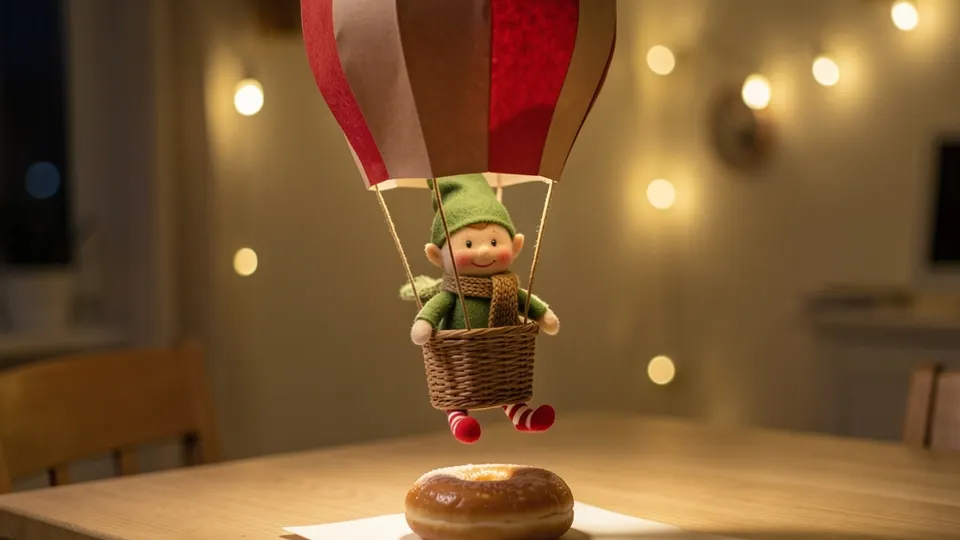
The elf on the shelf arrival letter sets up the whole month. It tells your kids who this little visitor is, what it does at night, and how to behave around it, so you are not answering a dozen questions before breakfast.
You do not need a scroll or calligraphy. A small card, a pen and five quiet minutes after bedtime are enough. This page covers what a first letter should say, one sample for a brand-new elf and one for an elf coming back, plus easy ways to deliver it. If you also want a bigger entrance scene to go with the note, see our arrival ideas.
What an elf arrival letter should cover
A welcome letter from the elf only has a few jobs. Hit these and you are done.
- The elf's name. If your family has not picked one yet, the elf can ask the kids to choose. That turns the first morning into a fun family vote, and our elf name ideas can help.
- What the elf does. One line is enough: it flies to the North Pole each night to tell Santa about the day and comes back before anyone wakes up.
- The one big rule. Most families use "please don't touch me." Add a second rule only if you really need it, such as "talk to me anytime, I'm a great listener."
- What the elf loves. Sharing, helping, silly jokes, tidy shoes by the door. Pick things you would genuinely like to see more of this month.
- How long it is staying. "Until Christmas Eve" sets expectations and makes the goodbye less of a shock later.
That is the whole letter. Everything else, from favorite foods to North Pole gossip, can come in later notes across the month.
Sample welcome letter for a new elf
Use this for a family meeting its elf for the first time. Swap the names and details.
Hi Ava and Sam! My name is Twinkle, and Santa picked me to be your family's elf this year. Each night I zip back to the North Pole to tell him about your day, then I fly home and find a brand-new spot to sit. Please don't touch me, or my magic won't work. I love giggles, kind words and kids who help clear the table. I'm staying until Christmas Eve. Let's have fun. Twinkle
Read it aloud for little ones and point to the elf as you go. For kids who are already reading, leave it where they will spot it first and let them read it to you.
Returning elf letter: welcoming an old friend back
A returning elf letter is different. Your child already knows the rules, so the note is more of a "guess who's back" message, with a hint that the elf remembers last year.
Guess who's home? It's me, Biscuit. I missed you all year. Santa told me you can whistle now, and I want a concert. My rules haven't changed: you can talk to me, but no touching. I'll be watching for the kind things you do, just like last time. Let's make this December even sillier than the last one. Biscuit
Two small touches make a returning letter feel personal:
- Name a milestone from the past year. A swimming badge, a first sleepover, the move to a big-kid bed. Kids are delighted that the elf kept up with their news.
- Refer to a memory from last December. "Remember when I fell asleep in the cereal box?" Kids love being reminded of old elf stunts.
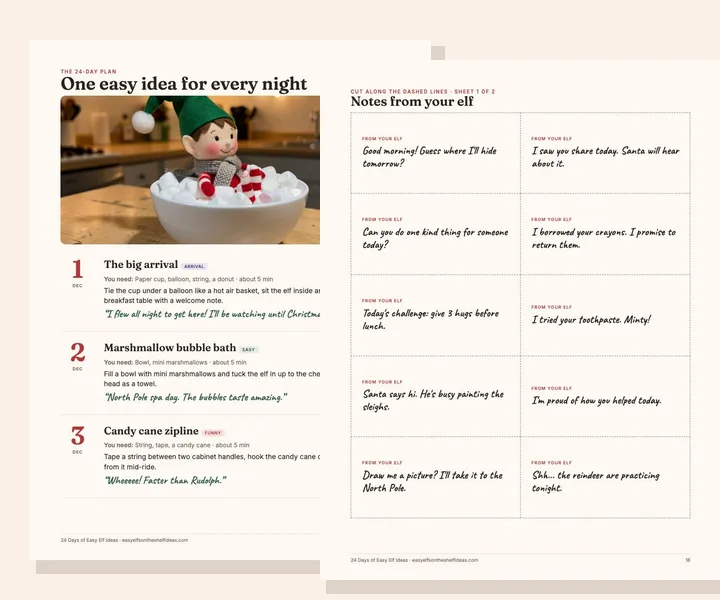
Free printable · 27 pages
Get 24 Days of Easy Elf Ideas
Print the arrival letter and the elf certificate from the free planner, fill in your elf's name tonight, and the first morning is ready in five minutes.
- One 5-minute idea for every night, with the note your elf leaves
- 15 one-minute rescues for nights you forget
- 20 cut-out elf notes, arrival and goodbye letters
- Certificate, tracker, 4 coloring pages · US Letter and A4
Ways to deliver the elf on the shelf arrival letter
The letter can arrive with the elf or before it. Pick whichever fits your evening.
- Pinned under the elf. The simplest version: the elf sits on the table with the card tucked beneath it. You need: the card, the elf.
- North Pole mail by the door. Write "Airmail: North Pole to your house" and leave it on the doormat in the morning. You need: envelope, a pen.
- The night before the elf. Leave the letter on its own, saying the elf will arrive tomorrow. Kids get a full day of excitement. You need: just the card.
- With a dusting of "snow." Sprinkle a little flour or sugar on a tray around the letter for landing marks. Keep it on a tray so cleanup is one shake into the sink. You need: tray, a spoonful of flour.
- Inside a breakfast bowl. Fold the note and set it in an empty cereal bowl. Your child finds it while you pour.
If you have a toddler, keep any props off low surfaces and away from small hands.
Common questions kids ask after the first letter
Expect a few. Short, calm answers keep the story easy to maintain.
- "Why can't I touch it?" Many families say the elf's magic is fragile and needs to stay elf-only. If someone touches it by accident, the elf can leave a note the next day saying it is fine.
- "Can I write back?" Absolutely. Set out a small card and a crayon beside the elf at bedtime, and let the elf reply by breakfast, even in one line.
- "Why didn't it come yesterday?" "Elves arrive when Santa sends them" works for any start date, early or late.
Still choosing a start date? The usual options are laid out in when does the elf come.
Small details that make the letter feel real
None of these are required, but each one takes a minute.
- Write in very small print or tiny capitals, as if the pen were bigger than the writer.
- Use a red or green pen and add a little drawing in the corner.
- Sign with a doodled elf hat or a thumbprint "elf footprint."
- Keep a copy of the letter. Next year it becomes a lovely way to show how much your kids have grown.
Frequently asked questions
What should the first elf on the shelf letter say?
The first letter should introduce the elf by name, or ask the kids to name it, explain that it reports to Santa each night and hides somewhere new every morning, and share the main rule, usually that children should not touch it. Add one or two things the elf loves to see, like kindness or helping, and say it will stay until Christmas Eve.
How do you have your elf on the shelf return each year?
Leave a short welcome-back letter with the elf on its arrival morning. Mention something your child did during the year and a funny memory from last December, so it feels like an old friend returning. Remind everyone the rules have not changed. You can deliver the letter the night before as a teaser, which gives kids a full day of excitement.
What can you do for an elf's first arrival?
Keep the first arrival easy so you can keep the tradition going. Sit the elf on the breakfast table with its arrival letter, or have the letter come one day early to announce the elf. Simple touches like a dusting of flour snow on a tray or a special North Pole envelope make the moment feel like a big event without much work.
Is 7 too old to start the elf on the shelf?
No. Plenty of families start when children are six, seven or even older. An older child can enjoy reading the arrival letter themselves, writing replies and hunting for the elf each morning. Make the letter a little longer and more playful, with riddles or jokes, so it suits a reader rather than a toddler. The tradition works at any age a child enjoys it.
When should the elf arrival letter be delivered?
Most families leave the arrival letter with the elf on its first morning, so kids find both at once. Another option is to send the letter a day early, announcing that the elf is on its way. That builds excitement and gives you an extra evening to prepare. If the elf arrives late, the letter is the natural place to explain the delay.