Elf on the shelf ideas
Elf on the Shelf Rules Most Families Follow
By the editorial team · Updated 2026-11-23 · Ideas tested with things you have at home
Quick answer. The elf on the shelf rules most families use are simple: kids don't touch the elf, the elf moves to a new spot every night, and the elf listens but doesn't talk. These are common family practices, not laws, so keep the ones that make December fun and drop the ones that make it stressful.
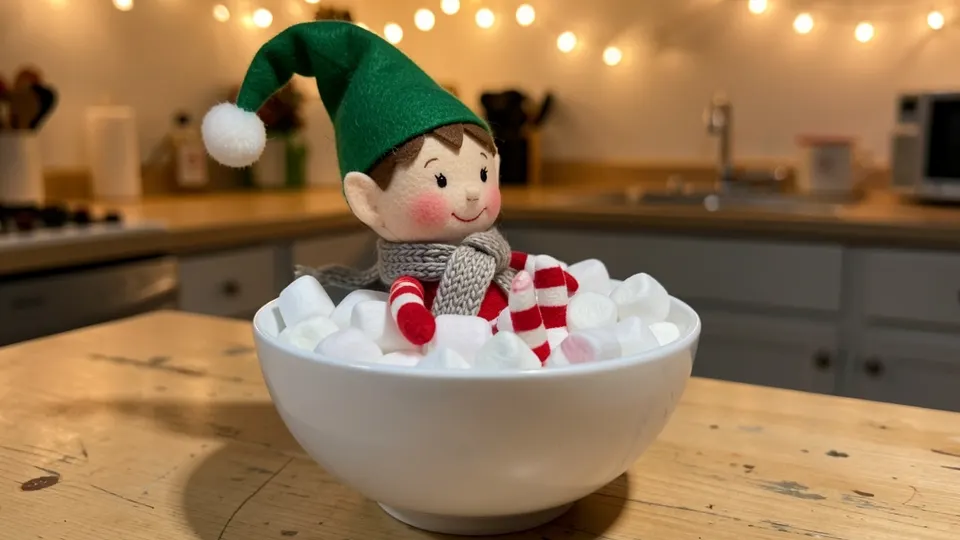
Elf on the shelf rules are less a rulebook and more a set of house customs that have spread from family to family. You will hear the same three again and again from parents, but every home bends them a little. This page walks through the usual ones, what to do when a rule gets broken, and the questions every parent hits sooner or later: when to start, when to stop and what to say when your child asks if the elf is real.
The common elf on the shelf rules
These are the rules most families tell their kids. You do not need all of them.
- Don't touch the elf. The story goes that touching makes the elf lose a bit of its sparkle. It keeps hands off and gives the elf a reason to stay where you put it.
- The elf moves at night. Each night the elf flies off to report to Santa and lands somewhere new before morning. This is why kids hunt for it at breakfast.
- The elf doesn't talk. Kids can talk to the elf, tell it secrets and share wishes, but the elf stays still and silent. Notes are the exception many families allow.
- The elf arrives and leaves on set days. Many families welcome the elf around the start of December and say goodbye on Christmas Eve. See when the elf comes for timing ideas.
Some households add their own, like "the elf only visits the living room" or "the elf takes the weekend off." Rules that make your life easier are good rules.
Can you touch elf on the shelf?
In the usual story, kids are asked not to touch the elf, while grown-ups are allowed when they need to move it out of danger, like off a hot stove or away from the dog. Parents moving the elf is not something you need to explain, because in the story the elf moves itself.
For very young kids, many families relax this rule entirely and let the elf be hugged. Toddlers grab everything, and a no-touch rule can lead to tears. Our toddler ideas page has more on keeping it gentle for little ones.
With older kids, the no-touch rule is part of the fun. It adds a little suspense to every morning.
Elf on the shelf touching rules: what to do if it's touched
Sooner or later, someone touches the elf. A sibling bumps it, the cat knocks it down or a curious kid just has to check. Here are calm fixes families use.
- Sprinkle some magic. A pinch of sugar or cinnamon next to the elf at night is a popular "healing" trick. By morning, the elf is fine and back in a new spot.
- Write a get-well note. Kids can write or draw a sorry note and leave it beside the elf. The elf can reply the next morning.
- Sing to the elf. Some families have a short song kids sing to help the elf feel better before bedtime.
- The elf rests a day. If you are exhausted anyway, the elf can stay put for one night to recover. Problem solved for you too.
Whatever you choose, keep it light. A touched elf should never mean a ruined Christmas or a scared child.
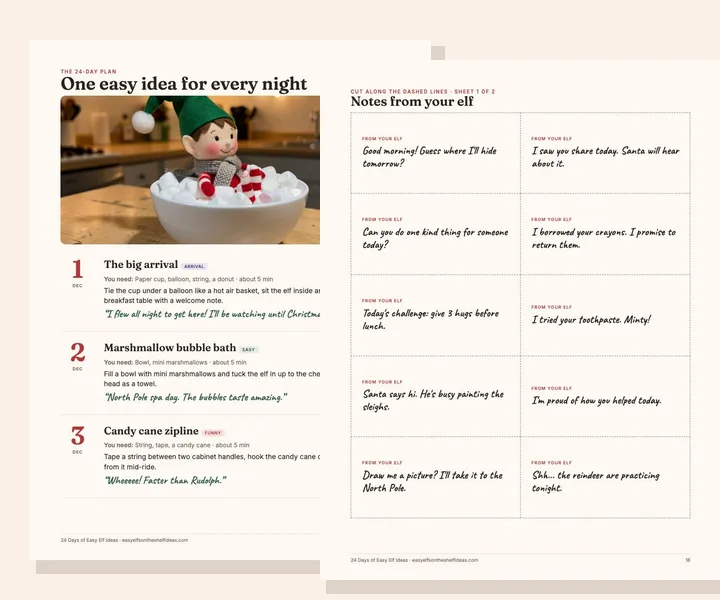
Free printable · 27 pages
Get 24 Days of Easy Elf Ideas
Print the 15 one-minute rescues and tape them inside a cupboard for the mornings the elf forgot to move.
- One 5-minute idea for every night, with the note your elf leaves
- 15 one-minute rescues for nights you forget
- 20 cut-out elf notes, arrival and goodbye letters
- Certificate, tracker, 4 coloring pages · US Letter and A4
When to start and when to stop
There is no right age to begin. Some families start in a child's first December just for photos, and others wait until kids are three or four and can enjoy the hunt.
As for what age to stop elf on the shelf, most families let their kids lead. Signs it might be time to change things:
- Your child starts asking pointed questions and seems ready for the truth.
- They have more fun helping set up than finding the elf.
- The nightly setup has become a chore for you and joy-free for them.
Many families do not stop at all. They just switch roles, and older kids become the elf's secret helpers for younger siblings. That keeps the tradition going without the pretending.
One elf per house or one per kid?
Most families have one elf for the whole house, and it works fine for siblings of any age. One elf means one setup a night and one name everyone shares.
Some families with kids far apart in age, or twins who argue, choose two elves. It can be sweet, but it is double the work and double the late nights. If you go that way, give each elf a different personality so setups stay fresh, and pick paired names from our elf names list.
Telling the truth when kids ask
At some point your child will ask, "Is the elf real, or is it you?" There is no single right answer, but a few approaches feel kind.
- Ask what they think first. "What do you think?" lets you hear whether they want the story or the truth.
- Be honest if they really want to know. Many parents say the elf is a fun game the family plays to make December special, and that the magic is in doing it together.
- Invite them in. Offer the job of secret helper: choosing setups, writing notes or hiding the elf for younger siblings.
- Don't make them feel silly. Believing was part of the fun, and figuring it out is a sign of growing up.
Kids who learn the truth gently often love the tradition even more, because now they get to be the ones making the surprise.
What if the elf doesn't move
Every parent forgets at least once. When your child runs in to say the elf didn't move, try one of these:
- The elf liked that spot so much it chose to stay.
- The elf was so tired from flying it fell asleep.
- The elf was waiting to see a kind deed before moving again.
Then set an alarm for the next night. For ideas you can do in sixty seconds, see our last-minute elf ideas.
Frequently asked questions
What are the elf on the shelf rules?
Most families follow three simple rules. Kids don't touch the elf, the elf moves to a new spot every night after flying to the North Pole, and the elf listens but doesn't talk. Many families also set an arrival day in early December and a goodbye on Christmas Eve. These are household customs, so adjust them to fit your family.
Are parents allowed to touch the elf on the shelf?
In most family versions of the story, yes. Grown-ups can move the elf if it is in danger, such as near a candle, a heater, a pet or a hot stove. Kids are usually asked not to touch it. Since the elf moves on its own in the story, parents never need to explain the nightly moves to their children.
What happens if you touch the elf on the shelf?
In the usual story, a touched elf loses a bit of its sparkle, but it is easy to fix. Many families sprinkle sugar or cinnamon beside the elf at night, or have kids write a short sorry note. By morning the elf is back to normal in a new spot. Keep the response calm so no child feels they ruined Christmas.
What age do kids stop doing elf on the shelf?
There is no set age. Many families keep going until kids start asking whether the elf is real, then let them become secret helpers for younger siblings. Some teens still enjoy setting up the elf for fun. Watch your child's interest rather than the calendar, and change the tradition when it stops feeling enjoyable for everyone.
Why did my elf not come back?
Sometimes the elf stays in the same place or takes a night off. A simple explanation works: the elf was tired after flying, liked the spot too much to leave or wanted to see an extra kind deed first. Kids usually accept it happily, especially if the elf leaves a short note the next night explaining where it went.
What should you say when kids ask if the elf is real?
Start by asking what they think, so you know whether they want the story or the truth. If they are ready, explain that the elf is a game your family plays to make December fun. Then invite them to help, choosing setups or writing notes for younger kids. Many children enjoy the tradition even more once they are part of it.